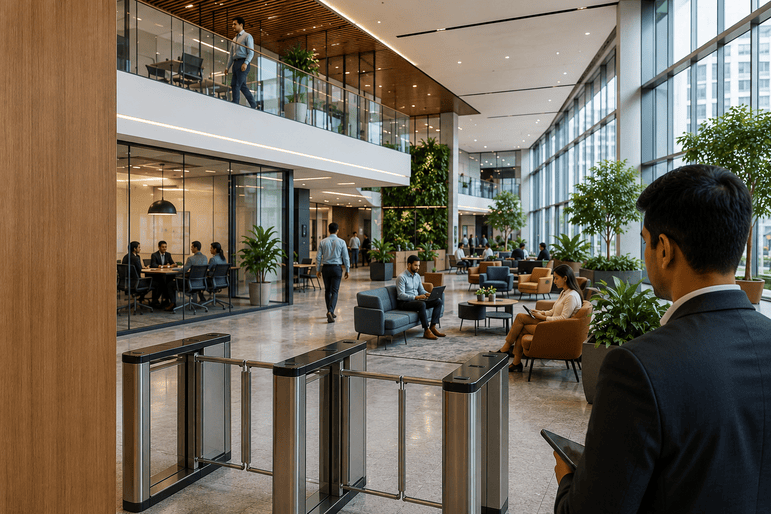
The modern workplace experience begins long before an employee reaches their desk.
It starts at the entrance gate. The lobby. The visitor queue. The access checkpoint. The elevator wait time – the ability to navigate the building without confusion or delays.
In many commercial spaces today, these first interactions shape how employees perceive the entire workplace experience. This is why workplace smart access is becoming increasingly important in commercial real estate.
Employees are no longer evaluating workplaces only by office interiors or amenities. They are evaluating how seamlessly the workplace functions from the moment they arrive.
The first impression is operational
For years, workplace management focused heavily on infrastructure and facilities. But employee expectations have evolved. Today’s workforce is accustomed to frictionless digital experiences in everyday life, including one-tap payments, QR-based check-ins, instant approvals, and mobile-first interactions.
When employees enter workplaces that still rely on manual visitor approvals, long queues, disconnected access systems, or confusing navigation flows, the experience immediately feels outdated.
Why workplace smart access matters
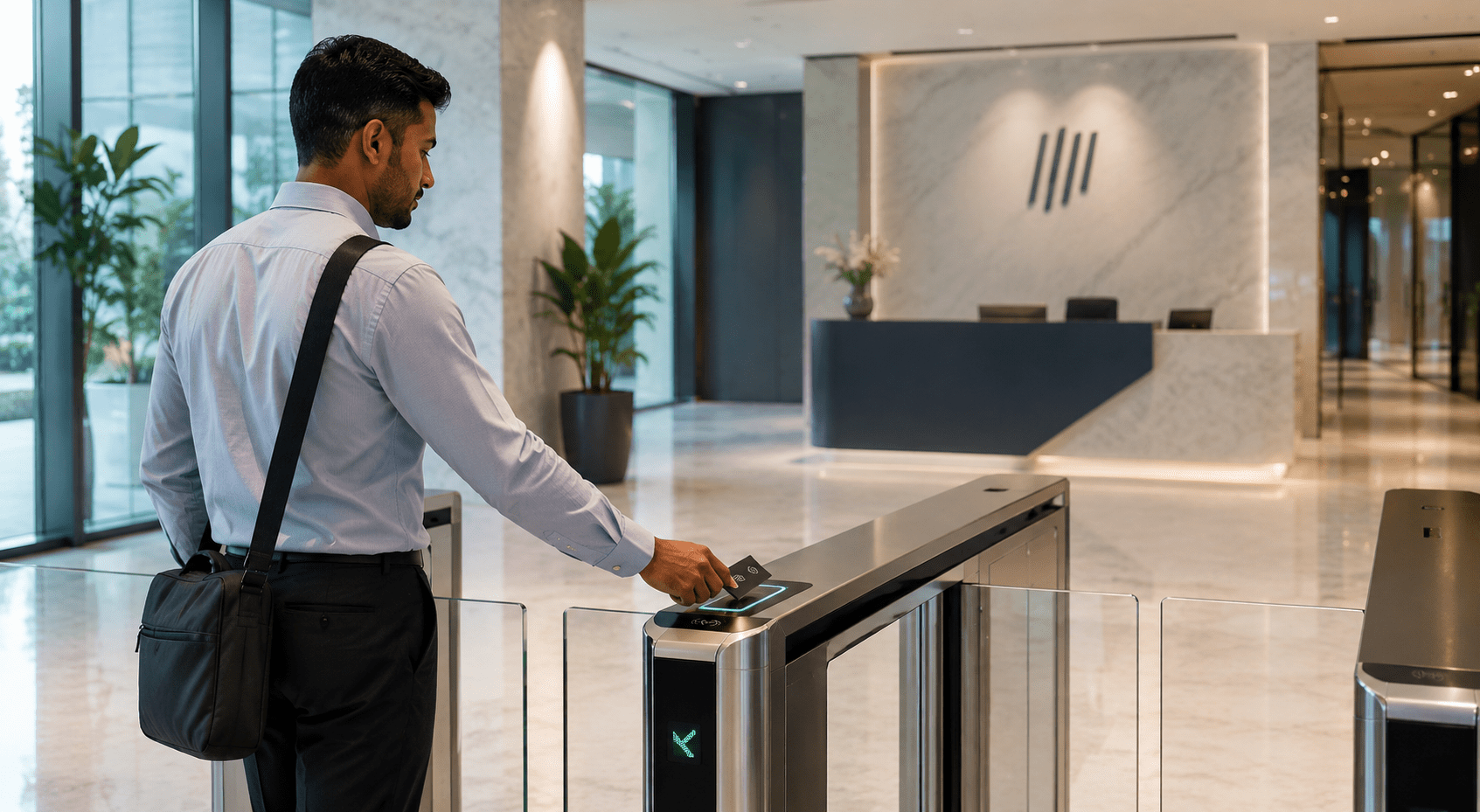
Smart access is no longer limited to security alone. It has become a critical part of workplace experience design. A connected workplace smart access system helps simplify:
- Employee entry and authentication
- Visitor pre-approvals
- Delivery access
- Elevator access management
- Navigation across office campuses
More importantly, it reduces friction. Employees increasingly expect workplaces to function with the same level of speed and convenience they experience through consumer technology platforms.
This is particularly important in large office parks and mixed-use developments where thousands of employees, visitors, vendors, and service staff interact with operational systems daily.
The link between access and workplace experience
The arrival experience directly influences how employees engage with the workplace environment. Consider these two scenarios:
- In one office campus, employees wait at security desks, call hosts manually for approvals, navigate disconnected systems, and struggle to locate meeting rooms or amenities.
- In another, visitor approvals happen digitally, access credentials are synchronized, navigation is simplified, and services are connected through one platform.
Other than operational efficiency, the two scenarios also impact employee perception. A smoother arrival experience creates reduced workplace friction, faster movement across the campus, better employee satisfaction, improved visitor experiences, and stronger perception of workplace quality.
Over time, these operational details shape tenant satisfaction and workplace engagement.
Smart access as part of the workplace infrastructure
As commercial real estate evolves toward experience-led workplaces, smart access is becoming foundational infrastructure rather than an optional technology layer.
The shift is now moving beyond isolated access control systems toward connected workplace ecosystems where access, visitor management, communication, amenities, and operational workflows function together seamlessly.
This is where ANACITY Business is helping workplaces create more connected employee experiences by bringing together smart access, workplace operations, visitor workflows, helpdesk systems, and engagement touchpoints into one operational ecosystem. Read IoT-Based Access Control: Redefining Security for the Smart Era.
i