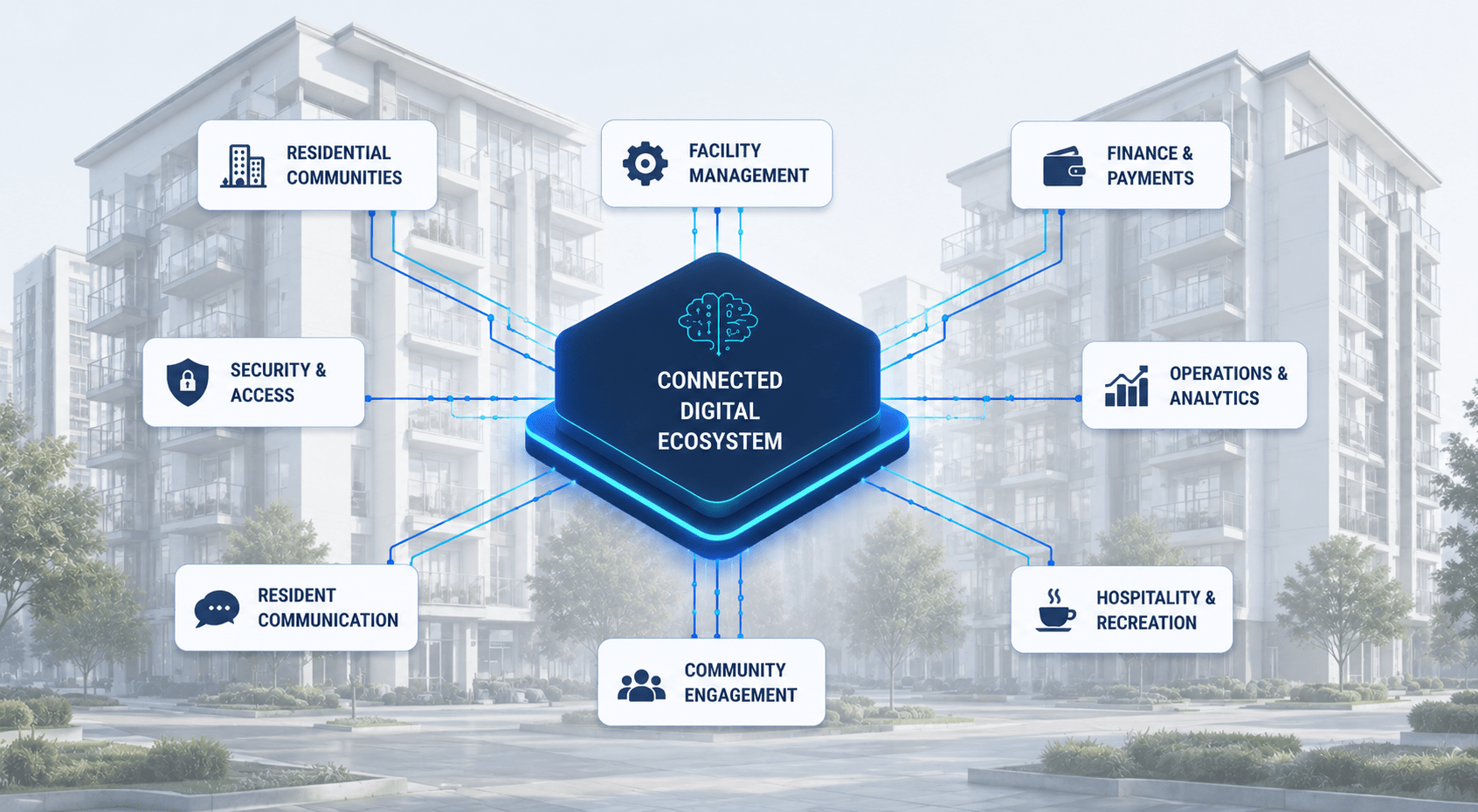
The conversation around AI in real estate is growing rapidly. From predictive maintenance and intelligent customer support to smart security and automated operations, AI is increasingly being positioned as the next major transformation layer for the industry.
But there is an important reality that often gets overlooked: AI is only as effective as the systems and data behind it.
With fragmented platforms, disconnected workflows, spreadsheets, manual coordination, and isolated software tools, even the most advanced AI tools struggle to deliver meaningful value. That is why the future of AI in real estate begins not with algorithms, but with connected digital ecosystems.
The real challenge isn’t AI adoption – it’s fragmentation
Data is the building block of AI. As this Forbes article puts it, AI Needs Data More Than Data Needs AI. In real estate, the problem lies in the fragmentation
For years, real estate technology evolved function by function. Visitor management became one application. Amenity booking became another. Customer relationship management, accounting systems, helpdesks, and security operations all developed independently.
While each system may solve a specific operational problem, the overall experience remains disconnected.
This fragmentation creates several challenges:
- Data exists in silos
- Teams operate with limited visibility
- Resident journeys become inconsistent
- Operational intelligence remains incomplete
Most importantly, disconnected systems prevent organisations from creating a unified view of the customer and community experience. Without connected data, AI has limited context to work with.
Why connected ecosystems matter for AI in real estate?
A connected digital ecosystem brings together operations, communication, finance, security, customer engagement, and community management into a unified platform environment.
This creates structured and centralized operational data across the entire real estate lifecycle – from pre-sales interactions to post-possession community living. Connected systems bring transparency to operational workflows, providing teams with real-time visibility, thus facilitating data-driven decision making. It also ensures that resident interactions are easier to track.
Over time, this connected infrastructure becomes the foundation upon which future intelligent capabilities for AI in real estate can evolve. In other words, connected ecosystems create intelligence readiness.
The shift from systems to ecosystems
In the last few years, real estate technology has shifted towards orchestrating experiences across multiple touchpoints instead of deploying standalone tools. Residents today expect seamless interactions:
- One platform for access, communication, and services
- Faster issue resolution
- Personalized engagement
- Real-time visibility into their community experience
Meeting these expectations requires platforms that unify workflows rather than isolate them. This is where the industry is beginning to shift from multiple systems to integrated ecosystems – a critical precursor to AI in real estate. Read more at From Systems to Experiences: Powering Connected Community Living.
Preparing the next phase for AI in Real Estate
AI will undoubtedly play a major role in the future of real estate. But before automation becomes intelligent, operations must first become connected.
The organizations that will benefit most from AI in the coming years are not necessarily those experimenting with the most tools today. They are the ones building strong digital foundations with structured data environments, integrated workflows, and connected operational ecosystems.
ANACITY is a community management solution that unifies multiple systems on one platform, creating a single source of truth. Learn how connected digital platforms are reshaping modern community management and resident engagement. Connect with us at support or call 8088611229. For global enquiries, write to us at sales@anacity.com or visit www.anacity.com.
i