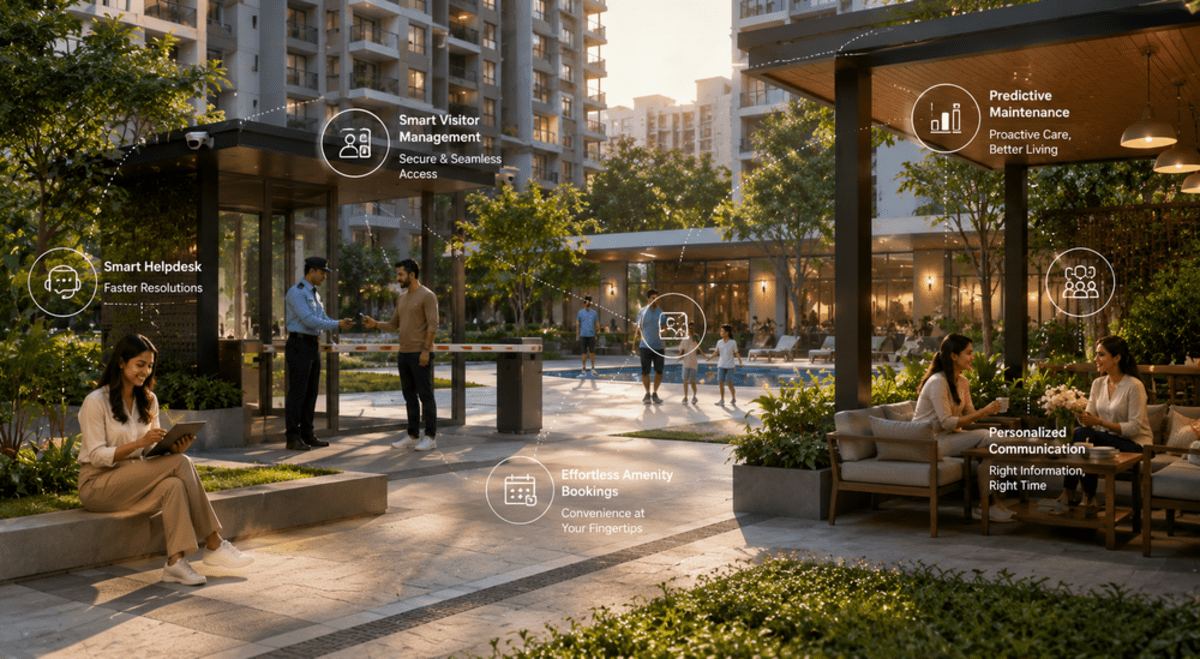
Artificial Intelligence is the hot topic in real estate technology today. From predictive maintenance and automated customer support to smart security and personalized services, AI is often presented as the future of community living.
But when it comes to AI resident experience, an important question remains: what can AI realistically improve, and where do traditional community management practices still matter?
The answer lies somewhere between technology and operations.
The growing interest in AI resident experience
Resident expectations have changed significantly over the last decade. Today’s residents expect the same level of convenience from their communities that they receive from consumer apps and digital services.
They want faster responses to service requests, easier communication with management teams, seamless amenity bookings, transparency on community matters, and easy access to information and services.
AI has the potential to support many of these expectations by helping communities process information faster and deliver more personalized experiences. Read more about What AI Could Mean for the Future of Community Management.
Where AI can improve resident experience
One of AI’s biggest strengths is its ability to identify patterns within large volumes of operational data. In community management, AI could potentially help by:
Improving service response times: By analysing historical complaint and maintenance records, AI can help identify recurring issues, prioritize urgent requests, and assist management teams in allocating resources more effectively.
Enhancing resident communication: AI-powered communication tools can help answer routine questions, provide instant updates, and direct residents to relevant information without requiring manual intervention for every interaction.
Supporting predictive maintenance: Instead of waiting for assets to fail, AI resident experience systems can analyze maintenance histories and operational data to identify potential issues before they become major problems.
Delivering personalized experiences: Over time, AI may help communities recommend relevant services, events, or amenities based on resident preferences and usage patterns.
What AI cannot do
Despite its potential, AI is not a substitute for effective community management. AI cannot solve operational problems caused by disconnected systems, poor processes, or incomplete data.
For example:
- AI cannot improve visibility if information exists across multiple spreadsheets and disconnected platforms.
- AI cannot resolve service requests without operational workflows in place.
- AI cannot replace human judgment in conflict resolution or community engagement.
- AI cannot create trust and transparency on its own.
Most importantly, AI cannot generate meaningful insights from data that is fragmented or inconsistent.
The foundation of AI resident experience
Before communities can benefit from AI, they need connected digital infrastructure. This includes:
- Structured complaint management
- Centralized resident communication
- Digital amenity booking
- Integrated financial management
- Consistent operational workflows
When these systems work together, they create the operational data that future AI capabilities can learn from and analyse. This is why many industry experts believe that the future of AI resident experience starts with digital readiness rather than artificial intelligence itself. Find out why AI in Real Estate Starts with Connected Digital Ecosystems.
Looking beyond the AI hype
AI will undoubtedly play an important role in the future of community management. However, the communities that benefit most will not necessarily be those adopting the latest AI tools first.
They will be the communities that have already built strong digital foundations.
ANACITY helps create this foundation by bringing together resident communication, complaint management, amenity booking, financial workflows, and operational processes into a connected ecosystem. Over time, these connected environments create the structured data and visibility that intelligent technologies depend on.
i